
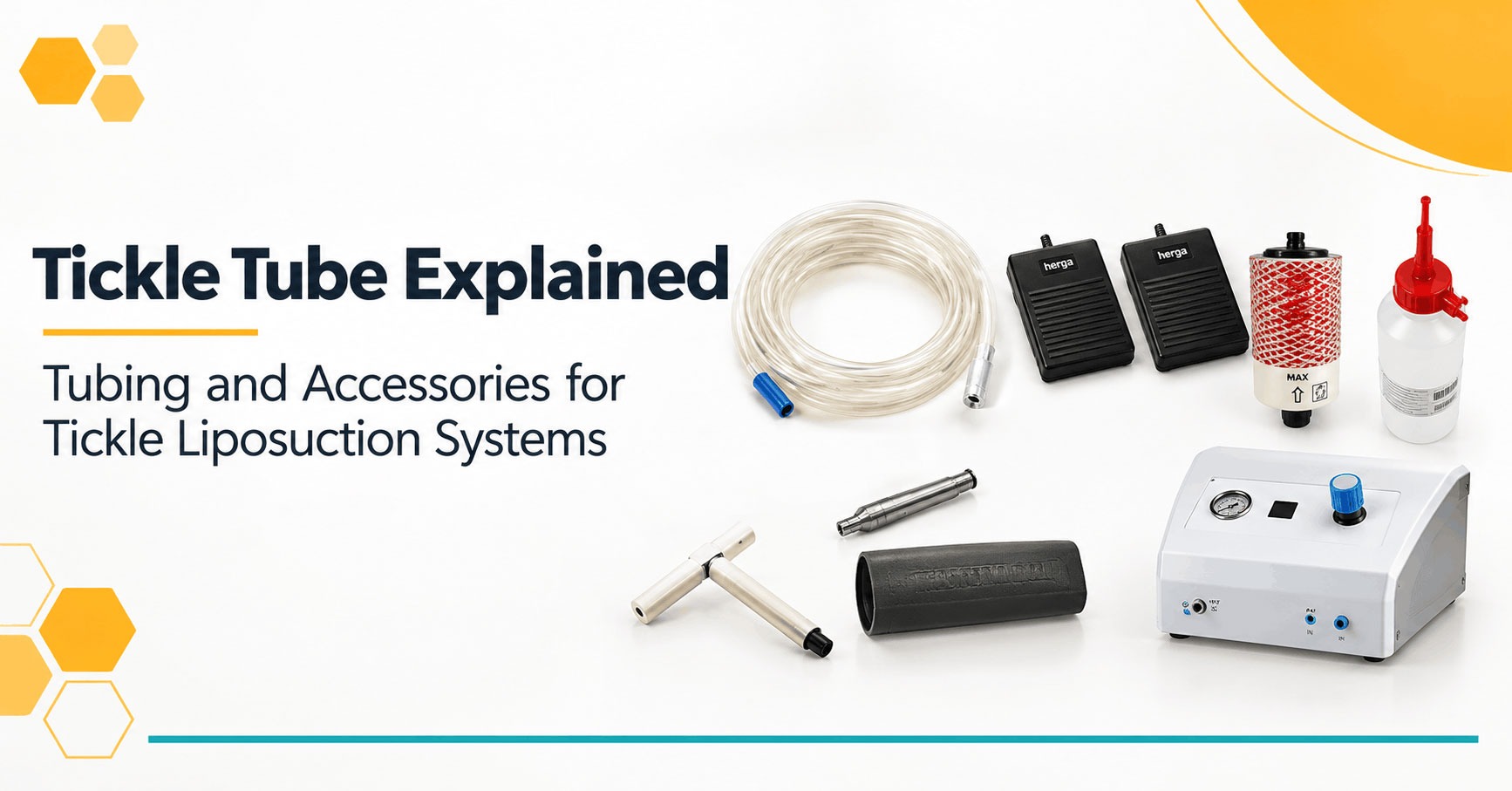
There’s more to running a TickleLipo system than just the controller and the handpiece. Tubing, footswitches, and a handful of supporting accessories are what actually tie everything together and keep the equipment doing what it’s supposed to do. Once your team understands these parts, picking the right replacements and managing supplies gets a lot less confusing — and you stop wasting money on the wrong order.
When people say “tickle tube,” they’re usually talking about tubing used with TickleLipo equipment, which sometimes means assemblies that bundle multiple lines together. Depending on how your setup is configured, these lines handle pneumatic operation and aspiration. We’ll walk through how the tubing actually works, which accessories you should have on your radar, and what to double-check before you order replacements.
What People Actually Mean by “Tickle Tube”
It’s really just shorthand for the tubing assemblies used with TickleLipo systems. These connect the compatible parts of your equipment, though the exact design varies depending on the model, the connector type, and how it’s being used. Bottom line: always check the manufacturer’s specs before grabbing a replacement — don’t assume one tube fits all.
Tickle liposuction as a power-assisted technique
TickleLipo, developed by Euromi, runs on power-assisted technology that creates mechanical movement to help surgeons during liposuction. That’s different from manual liposuction, where the surgeon is the one moving the cannula by hand the whole time.
Whatever supporting components you use have to match what the equipment actually calls for. The right tickle lipo tubing makes the necessary connections, and a compatible footswitch gives the operator proper control. Getting the components right — and making sure whoever’s operating it is properly trained — matters just as much as following the manufacturer’s instructions to the letter.
The tubing set that connects handpiece, air, and aspiration
A tubing assembly links up the relevant pieces — the pneumatic supply, the handpiece, and the aspiration pathway. The air line handles pneumatic operation, while the aspiration line carries whatever’s been aspirated over to the collection equipment.
When you’re comparing tickle liposuction tubing options, check the length, the connectors, how the lines are configured, and whether it’s actually compatible with your system. Two products can look nearly identical and still not be interchangeable, so it’s worth confirming specs before you place the order rather than finding out the hard way.
How the System Is Actually Plumbed
The controller, handpiece, footswitch, and tubing each do their own job. Once your staff understands how they connect, spotting the right replacement part — and keeping the whole setup organized — gets a lot easier.
Controller, handpiece, and footswitch
The controller runs the pneumatic side of things, while the handpiece is what produces the mechanical movement behind power-assisted liposuction. A compatible footswitch lets the operator control when it’s activated.
Tubing connects everything according to how the system’s designed. Before anyone uses it, trained staff should check the connections and run through whatever checks the manufacturer specifies. And if something’s damaged, swap it out only with approved, compatible parts — don’t improvise.
Airlines vs. aspiration line
Airlines carry compressed air for pneumatic operation. Aspiration lines are a completely separate pathway, moving material over to the collection system.
These two lines have different jobs and different requirements. When you’re buying power-assisted liposuction tubing, check pressure compatibility, whether it’s actually suited for aspiration, the connector specs, and which equipment model it’s meant for. And give tubing a real once-over for cracks, kinks, blockages, or loose fittings, following whatever the manufacturer lays out.
Triple Bonded 3-Port Tubing: One Extrusion, Fewer Tangles
Triple-bonded tubing takes multiple pathways and joins them into one tidier assembly. Less loose tubing hanging around your equipment, and setup tends to go a bit smoother too.
What’s actually bonded together
A triple-bonded 3-port tubing assembly brings three pathways together into one joined piece, while still keeping each channel separate internally. Depending on the specific product, these can cover the air and aspiration connections your system needs.
When you’re sizing up tickle lipo tubing, look at the port count, material specs, how the connectors are arranged, and what it’s actually meant for. And just to be clear — don’t modify or combine tubing assemblies on your own unless the manufacturer flat-out says it’s fine.
Pack sizes and compatibility
Tubing often comes in different pack sizes, which helps depending on whether you’re a smaller practice or a facility juggling multiple systems. Pick your quantities based on how many procedures you’re running, how often you need replacements, and how much storage space you’ve actually got.
You might come across the term Euromi Lipomatic tubing while searching for products, but don’t assume it fits every TickleLipo model just because the name matches. Check the equipment model and connector specs before buying any replacement assembly.
Other Consumables and Accessories
Tubing is just one piece of the puzzle. Depending on your model, you may also need heat-sink sleeves, footswitches, air filters, and whatever maintenance products the manufacturer has approved.
Single-use heat-sink sleeves
Heat-sink sleeves are built for specific equipment configurations and specific thermal-management needs. Before ordering, confirm the right part number and whether it’s actually single-use.
Stick to the manufacturer’s handling and disposal instructions — don’t reuse or reprocess single-use accessories against what they’re rated for. If you’re not sure something’s compatible, check with your equipment supplier before swapping anything in.
Pneumatic footswitches (single and two-pack)
A pneumatic footswitch lets operators activate the equipment with just foot pressure, which frees up their hands. You’ll find these sold individually or in two-packs, depending on what the supplier offers.
Before you order, confirm the connector type, whether it works with your controller, and whether the listing is actually a complete footswitch assembly (not just part of one). Give existing units a regular once-over, and pull anything damaged out of service per the manufacturer’s guidance.
Controller air filter and handpiece oil
Air filters keep the air entering your pneumatic equipment in check. Handpiece oil, where it’s called for, helps maintain the components that are designed to need lubrication.
Only use the filter and lubricant approved for your specific model — don’t substitute something that “should” work. When you’re sourcing TickleLipo accessories, check part numbers, what maintenance actually requires, and whether the product’s even still in stock. Cellmyx is one supplier worth looking into if you’re researching liposuction equipment and compatible accessories.
Choosing Capital Equipment: Euromi Lipomatic SP1 vs. SP6
Deciding between the Euromi Lipomatic SP1 and SP6 really comes down to going through the manufacturer’s specs for each one carefully. Compare the operating features, what each is actually meant for, what’s included out of the box, maintenance needs, and what accessories are available.
Tubing and footswitch requirements can differ between the two configurations, so don’t assume they’re interchangeable. Ask your supplier for a clear breakdown of what’s included, recommended consumables, warranty coverage, and how servicing works. And definitely confirm whether anything from your existing system can carry over to the new one.
Don’t assume Euromi Lipomatic tubing or other accessories built for one configuration will just fit another — they might look the same and still not work. Getting compatibility confirmed in writing goes a long way toward avoiding an expensive mistake.
Maintenance and Re-ordering Checklist
A consistent inspection and inventory routine makes it a lot easier to catch damaged components early and keep your supplies where they need to be. Stick to the manufacturer’s maintenance guidance rather than going off some generic replacement schedule you found elsewhere.
Run through this checklist when you’re reviewing inventory:
- Check compatibility — match tubing and accessories to the correct model and part number.
- Inspect tubing — look for cracks, kinks, loose connectors, and any visible wear.
- Review footswitches — confirm compatibility and get damaged units assessed.
- Check maintenance supplies — only use the specified filters and approved lubricants.
- Track stock — keep a record of usage, what’s on hand, and supplier lead times.
- Follow single-use rules — dispose of accessories exactly as the manufacturer instructs.
- Maintain records — hang on to purchase details, maintenance logs, and compatibility confirmations.
When you’re reordering Tickle liposuction tubing, nail down the configuration you actually need and order with enough lead time to account for supplier delays. The same process applies to other TickleLipo accessories — check what your equipment really requires before locking in a pack size.
Wrapping Up: Shop Tickle Liposuction Products
Getting a handle on the tickle tube and everything that supports it makes it a lot easier for clinics to pick the right products and keep their equipment setup organized. Tubing configuration, pneumatic connections, aspiration pathways, footswitch compatibility, model-specific quirks — all of it matters when you’re buying replacements.
If your practice is sourcing power-assisted liposuction tubing, put accuracy first: get the specs right, confirm equipment compatibility, and stick to what the manufacturer’s instructions call for. Double-check part numbers and current availability before you actually place the order.Cellmyx is a supplier worth considering when you’re researching liposuction products and accessories. Reach out to them directly for product details and to confirm compatibility with your setup. Getting the tubing and supporting components right from the start really does make inventory management simpler — and keeps you from making purchasing mistakes you could’ve easily avoided.
Frequently Asked Questions
Tickle tube” is really just the shorthand people search for — it refers to the tubing used in tickle liposuction, a power-assisted technique tied to Euromi’s TickleLipo and Lipomatic systems. Most of the time, it means the combined airline and aspiration tubing working together as one set.
Cellmyx describes its triple-bonded 3-port tubing as a double airline plus an aspiration line, all extruded together into a single configuration. It’s basically a way of bundling what used to be separate lines, which makes setup a lot less fiddly.
Yes — Cellmyx lists its triple-bonded tubing as sterile and single-use, so it’s not meant to be reused or reprocessed. As always, follow whatever instructions for use come packaged with the product rather than going off memory.
Beyond the tubing itself, you’ll typically need single-use heat-sink sleeves for the handpiece, pneumatic footswitches, a controller air filter, and handpiece oil. Worth keeping all of these on your restock radar alongside the tubing.
