
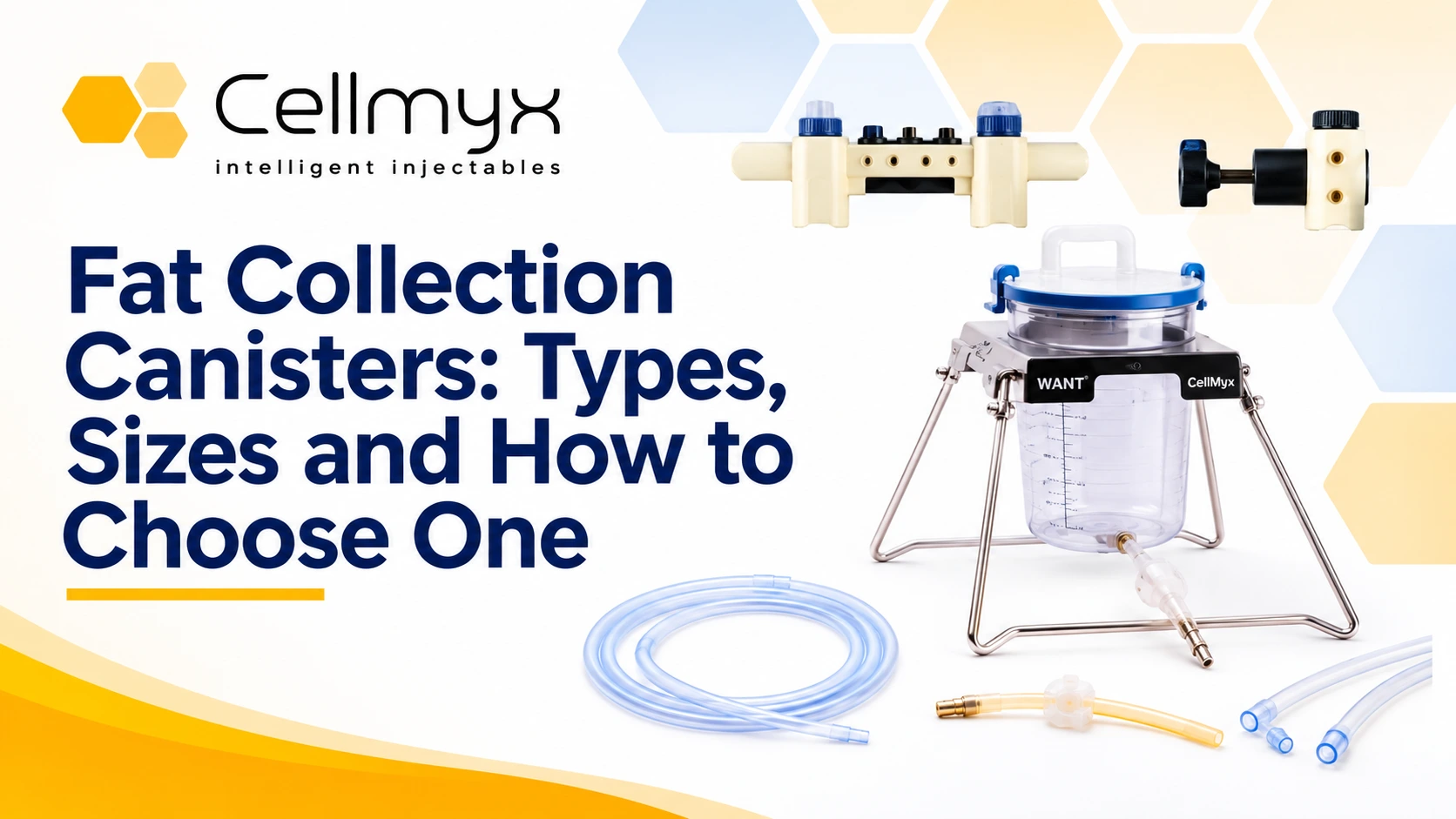
Picking the correct equipment for fat harvesting affects how smoothly your surgical workflow runs. The container you pick needs to help with more productive collection and safer handling. It should help with easier integration with your existing equipment.
A more suitable fat collection canister helps you manage many different harvest volumes without adding a lot of unnecessary steps to your procedure. Knowing about the available types and the sizes helps you make a more informed purchasing decision for your practice. Knowing about the accessories also helps.
What a Fat Collection Canister Does in Liposuction and Fat Grafting
A liposuction fat collection canister links to a suction system and then collects the aspirated adipose tissue during the liposuction. It provides a more designated space for holding the collected material during the procedure.
For fat grafting, the canister design matters a lot. Some models help only with collection, and others include a link allowing you to extract the collected fat into syringes or transfer it through compatible tubing.
The Three Types of Canister Setups
Your pick depends more on the sterilization needs and the handling preferences. It relies on how often you use the equipment.
Autoclavable reusable canisters
An autoclavable fat collection canister helps with more repeated use when you follow the tidying and sterilization instructions of the manufacturer. These models suit practices that prefer reusable equipment and have a well-established sterilization process.
Reusable canisters with disposable liners
A reusable fat collection canister with disposable liners mixes a reusable outer container with a single-use inner bag. You discard the liner after each case while keeping the outer canister for its intended use. The setup can simplify the cleanup and decrease direct contact with the collected material.
Single-use filtering canisters
Single-use filtering canisters combine collection and filtration in a more disposable design. They can suit practices that prefer single-use components and a much more simplified handling process. Check the filter design and the capacity. Also check the compatibility before picking the option.
Fat Collection Only vs Fat Collection and Transfer Canisters
Not every canister supports the same workflow. A collection-only model gathers aspirated fat but does not provide the same transfer features as a dedicated transfer model.
A fat grafting canister helps in the collection and handling of the aspirated adipose tissue for the grafting procedures. Depending on its design, it may allow the collected fat to be drawn into the syringes through the compatible extraction ports.
A fat transfe r canister may include a Luer connection or extraction port that supports controlled removal of collected material. The feature can help decrease a lot of unnecessary handling during the fat grafting procedures.
Pick a model based on whether your procedure needs the collection alone or both the collection and the transfer.
Sizes: From 250 mL to 3 L
Capacity affects how much material a canister holds before you even need another container. Basic options include:
❖ 250 mL and 500 mL: Suitable for much smaller volume collection needs.
❖ 1 L: Provides a more middle-range capacity for routine workflows.
❖ 2 L and 3 L: Provide greater capacity for procedures involving larger harvest volumes.
❖ 1,500 cc and 2,500 cc: Available as reusable outer canister options with disposable liners.
Cellmyx provides a lot of these configurations, giving you options for different collection needs.
What Else You Need: Lids, Stands, Tubing and Adaptors
A canister works as part of a much larger equipment setup. Before purchasing, you should check if the needed accessories come with the container or need separate ordering.
A fat canister with lid helps create the intended closed collection setup. Other more useful components include:
❖ Stands-Keep the canister upright and properly positioned.
❖ Tubing-Links the canister to the suction equipment.
❖ Adaptors-Help link the more compatible tubing and fittings.
❖ Extraction tubes-Help in the controlled removal of the collected material.
Check the connection types and the included accessories before even placing an order.
Material and Sterilization Considerations
Material choice affects durability and cleaning. It affects repeated use. Reusable canisters need more suitable materials and manufacturer-approved sterilization methods.
Choosing a fat collection canister with the right material and sterilization features helps you maintain an equipment setup that meets your practice’s handling requirements.
Some containers are autoclavable, and others are designed for use with disposable liners and are not autoclavable. Never assume each reusable outer container helps in the autoclaving. Check the product instructions each time before processing the equipment.
Compatibility With Suction and Power Assisted Systems
Your canister must link more properly with your existing suction equipment. Check the tubing diameter and the connection fittings. Besides that, check the vacuum needs and the adaptor specifications.
If you use the power assisted liposuction equipment then confirm if the complete setup helps in your much intended configuration. Compatibility with the harvesting device and the suction source helps prevent a lot of unnecessary equipment changes. Compatibility with the transfer accessories also helps in it.
Buyer’s Checklist
Use this checklist before selecting your equipment.
| Buying Consideration | What to Check |
| Capacity | 250 mL to 3 L or required volume |
| Canister type | Collection-only or transfer |
| Sterilization | Autoclavable or liner-based |
| Material | Medical-grade construction |
| Lid | Correct size and connection |
| Stand | Stable mounting option |
| Tubing | Compatible fittings and diameter |
| Adaptors | Matching connection requirements |
Key Takeaways
Picking the correct fat collection canister includes more than just checking the container sizes. You need to consider the collection volume and the sterilization needs. Besides that, consider the transfer features and the compatibility with your existing equipment.
A more suitable setup helps keep your workflow organized and helps in much consistent equipment handling. Check out the available options from Cellmyx to find the components matching the needs of your practice.
Choose a Canister Setup That Fits Your Practice
Ready to pick the correct canister set up for your practice? Shop fat collection canisters at Cellmyx or request information on a complete system.
Contact us by calling (949) 215-8560 or emailing [email protected].
FAQs
It is a container connected to suction that collects aspirated fat during liposuction. Some canisters also allow the fat to be transferred directly to syringes for grafting.
Cellmyx lists canisters from 250 mL up to 3 L, plus 1,500 cc and 2,500 cc reusable options. The right size depends on the expected harvest volume.
Autoclavable canisters are cleaned and sterilized between cases. Disposable liners fit inside a reusable canister so the liner is discarded after each case. Always follow the manufacturer’s instructions for use.
Most set-ups need a lid and a way to hold the canister upright, such as a stand or IV pole clamp. Cellmyx sells lids, stands, tubing adaptors and extraction tubes separately and in a system bundle.
Not always. A collection-only canister gathers the aspirate, while a fat transfer canister is designed so the fat can be drawn off into syringes for grafting.
