
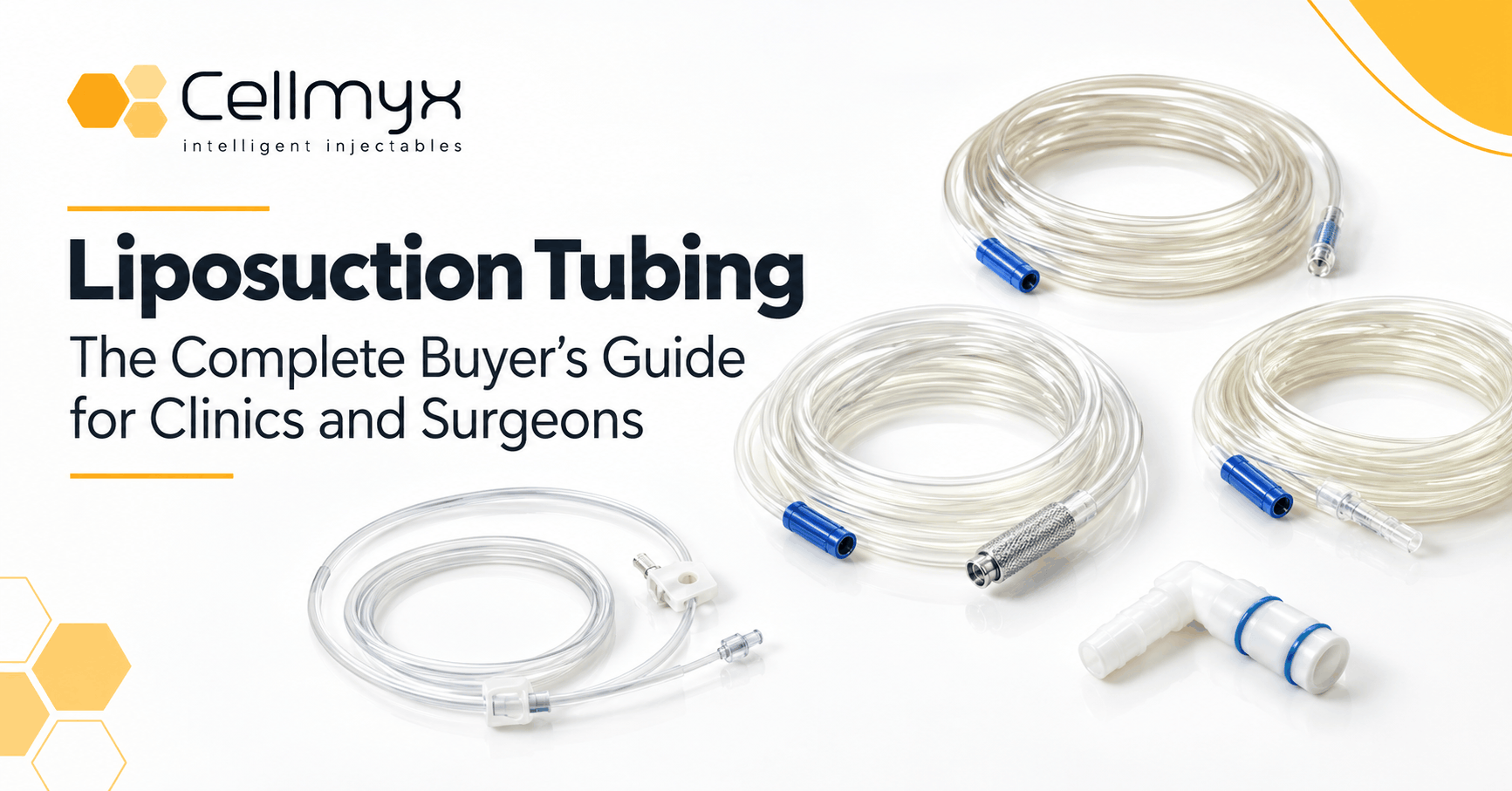
Here’s a scenario that probably sounds familiar: you’re mid-setup, everything’s prepped, and then someone realizes the liposuction tubing doesn’t actually match the connector. Now you’re scrambling. Nobody gets into this field because they love tubing — but it’s the thing quietly holding your whole liposuction system together. Infiltration, aspiration, fat transfer — all of it runs through these lines. One wrong call on material, length, bore size, or connector type, and you feel it at the worst possible moment.
So here’s the honest take: price alone shouldn’t be driving this decision. What actually matters is knowing your tubing types, understanding what sterility really demands, paying attention to how things are packaged, and making sure everything actually plays nice with the equipment you already own. That’s what keeps you from reordering twice. Let’s dig in.
What Is a Liposuction Tube, Really — and What’s It Actually Doing?
Strip away the technical language, and a liposuction tube is just a flexible link between parts of the system. Depending on where it sits, it might be carrying infiltration fluid, hauling aspirated material along, or helping move harvested fat from point A to point B.
Whatever it’s doing, it has one job: fit properly, connect securely, flex the way a real OR demands, and match what the manufacturer actually built it for. Mess up the configuration, and suddenly you’re fighting your own equipment instead of focusing on the patient in front of you — not a trade worth making.
Its role in the infiltration, aspiration, and fat collection circuit
Different jobs call for different tubing — that’s really the whole logic here. Infiltration tubing gets fluid where it needs to go. Aspiration tubing carries what’s removed toward the collection system. Fat-transfer tubing moves harvested adipose tissue along its own path.
Before you grab aspiration tubing, actually check the equipment’s connection type, pressure requirements, and intended use — don’t just eyeball it and hope. Every piece should match the manufacturer’s spec, full stop.
Tubing vs. cannula vs. handle: how it all connects
Easiest way to keep this straight: tubing is the flexible connector, the cannula is what physically goes into tissue, and the handle is what the clinician actually uses to control a compatible cannula or powered handpiece. Three different jobs, three different parts.
How they connect isn’t universal — it varies by system. So before ordering replacements, check connector dimensions, attachment style, and device compatibility yourself. Two tubes can look nearly identical and still not fit the same way, and that’s a lesson nobody wants to learn mid-procedure.
The Main Types of Liposuction Tubing
Different procedures, different devices, different tubing — once you see the categories laid out, it clicks pretty fast.
Infiltration (tumescent) tubing: single and double spike
Infiltration tubing moves fluid from a container into a compatible delivery system. Single-spike setups usually hook up to one fluid source; double-spike designs handle systems that need two connections running at once.
Your tumescent tubing needs to match your pump, your container, and your flow requirements — no shortcuts here. Cellmyx carries a few infiltration tubing configurations, including single-spike and double-spike options, so just confirm it actually fits your setup before you hit order.
Aspiration tubing: standard, power-assisted, and heavy-duty
Aspiration tubing carries removed material toward the collection canister. Standard tubing handles compatible conventional systems just fine, while power-assisted and heavy-duty versions are built for tougher equipment demands.
When you’re comparing liposuction suction tubing, check the internal diameter, connector style, operating requirements, and whether it’s actually built for your device. And read the listing closely — sterile? Single-use? That should be obvious, not something you’re guessing at.
Double and triple airline tubing for pneumatic handpieces
Pneumatic handpieces sometimes need tubing with two or three separate air pathways. Some assemblies even combine aspiration and pneumatic connections into one piece, depending on how the equipment’s designed.
Before you buy, nail down your exact handpiece model, how it connects, and what the manufacturer actually recommends. More lines on the tubing doesn’t automatically mean it’ll work with your system — that assumption has burned more than one clinic.
Fat transfer tubing for closed-loop systems (Lipo-Loop®)
Fat-transfer tubing moves harvested adipose tissue through compatible equipment, and closed-loop setups use dedicated components to keep everything on a defined, controlled path the whole way through.
Cellmyx makes Lipo-Loop® tubing for its compatible fat-transfer system. Worth the few extra minutes to check the full system requirements and make sure every piece genuinely belongs together, rather than assuming it does.
Materials, Length, and Bore: What the Specs Actually Mean
Material, length, and internal diameter aren’t just numbers on a spec sheet — they shape how the tubing flexes, fits, and holds up once it’s actually in use.
Silicone vs. PVC-type tubing
Silicone tubing flexes well and shows up across plenty of medical applications. PVC-type tubing is just as common in medical fluid-handling products — how well it performs comes down to its specific formulation and build.
Neither one wins by default. Weigh chemical compatibility, pressure needs, flexibility, sterility, and what the tubing’s actually for. And resist the urge to swap one material for another just because it “seems close enough” — follow what the manufacturer actually says.
12 ft lengths, and why they matter in the OR
A 12-foot tube buys you real breathing room between the equipment, the collection canister, and wherever you’re actually standing. Enough length keeps tension off your connections; too much just turns into something you’re stepping over.
Cellmyx offers 12-foot options on some of its infiltration and aspiration products. Check the specs, and be honest with yourself about how your OR is actually laid out before you settle on a length.
Sterile single-use vs. autoclavable
Sterile disposable tubing is built for exactly one use, as labeled — there’s no “it still looks fine” exception here. Autoclavable tubing, where it’s genuinely designed for reprocessing, has to follow validated cleaning and sterilization steps every single time, no skipping.
Don’t reuse disposable tubing. Don’t assume something’s autoclavable just because it survived the first wash. When you’re ordering liposuction tubing sets, check the sterility and reprocessing requirements on every component in the box — not just the one that looks important.
How to Choose Tubing for Your Equipment
The right tubing matches your equipment, your procedure, and what your facility actually requires. Confirm the specs before buying replacements — don’t just reorder the same SKU out of habit.
Compatibility with your pump, aspirator, and canisters
Know your pump or aspirator model, your collection canister, the connector type, and the tubing dimensions you actually need. Internal diameter and operating pressure have a sneaky way of being the thing that trips people up.
For infiltration, double-check the tubing matches your pump and fluid container. For aspiration, confirm it’s compatible with your vacuum source and collection pathway — both ends, not just one.
Compatibility with power-assisted and pneumatic handpieces
Power-assisted systems and pneumatic handpieces often need their own dedicated tubing assemblies. Check your exact device model and confirm the product’s actually approved for that configuration — “it looks the same” isn’t confirmation.
Running a few different equipment types in your clinic? Figure out whether one tubing assembly genuinely covers all of them, or whether you need separate products for each. And don’t modify connectors or mix components outside what the manufacturer specifies — that’s the kind of shortcut that comes back to bite you.
Packaging and Ordering: Boxes of 10 and Cases of 40
Packaging quietly shapes your unit costs, how much storage space you’re giving up, and how often you’re placing reorders. Cellmyx lists some aspiration products in boxes of 10 or cases of 40, though it really does vary by product — so check the actual listing instead of assuming.
Work out your real usage before deciding on quantity. Lower-volume clinics tend to do better with smaller orders; busier facilities usually manage inventory more smoothly by buying in bulk.
Pay attention to unit counts, tubing length, sterility, storage requirements, and lead times. And for sterile single-use liposuction tubing specifically — check that the packaging’s actually intact and glance at any expiration info before you use it. That thirty-second check is cheap insurance.
Quality, Sterility, and Regulatory Questions Worth Asking a Supplier
Before you order, ask for clear product specs and instructions for use. Is it supplied sterile? Single-use or reusable? What devices does it actually support? What storage conditions does it need? These aren’t awkward questions to ask a supplier — they should expect them.
For tumescent tubing, confirm it’s compatible with your fluid-delivery system. For aspiration products, verify the pressure requirements and connector dimensions actually match what you’re working with.
It’s also worth asking about regulatory documentation, quality controls, lot traceability, and what the replacement policy actually looks like. Don’t assume everything in a supplier’s catalog shares the same certifications — check the documentation for the specific item you’re buying, every time.
Cellmyx Liposuction Tubing Range at a Glance
Cellmyx covers tubing for infiltration, aspiration, pneumatic equipment, and fat-transfer applications. Same advice applies here as everywhere else in this guide — compare specs and compatibility before anything lands in your cart.
Infiltration
Single-spike and double-spike configurations, plus dedicated Lipo-Loop® infiltration tubing. Check connection style, pump compatibility, and intended use before ordering.
Aspiration
Standard and power-assisted options, plus double-airline, triple-airline, and heavy-duty configurations. Some of these are built for specific equipment models, so confirm compatibility before committing to an order.
Lipo-Loop® fat transfer
Lipo-Loop® tubing supports fat transfer within its compatible system. Worth verifying the required connections, collection components, and transfer pathway before you order.
Kits and accessories
Kits bundle components for specific equipment setups, which genuinely can take some of the hassle out of ordering. Just check what’s actually included, whether it fits your setup, and what accessories might need to be purchased separately. A kit’s only worth it if what’s inside actually matches what your clinic needs — otherwise you’re paying for parts you’ll never touch.
Ready to Browse, or Need Help Matching Your System?
At the end of the day, choosing the right liposuction tubing comes down to paying attention to the details most people skip past — material, length, bore size, connector design, sterility, and equipment compatibility. Taking the time upfront is what keeps clinics from ordering the wrong thing twice, and it’s what actually makes your workflow run the way it’s supposed to.Cellmyx covers infiltration, aspiration, pneumatic equipment, and Lipo-Loop® fat transfer. Browse the Cellmyx liposuction tubing catalog and compare the specs for yourself. And if you’re not sure which configuration fits your equipment, don’t guess — reach out to the supplier with your device model and current tubing details, and let them help you land on the right match.
