
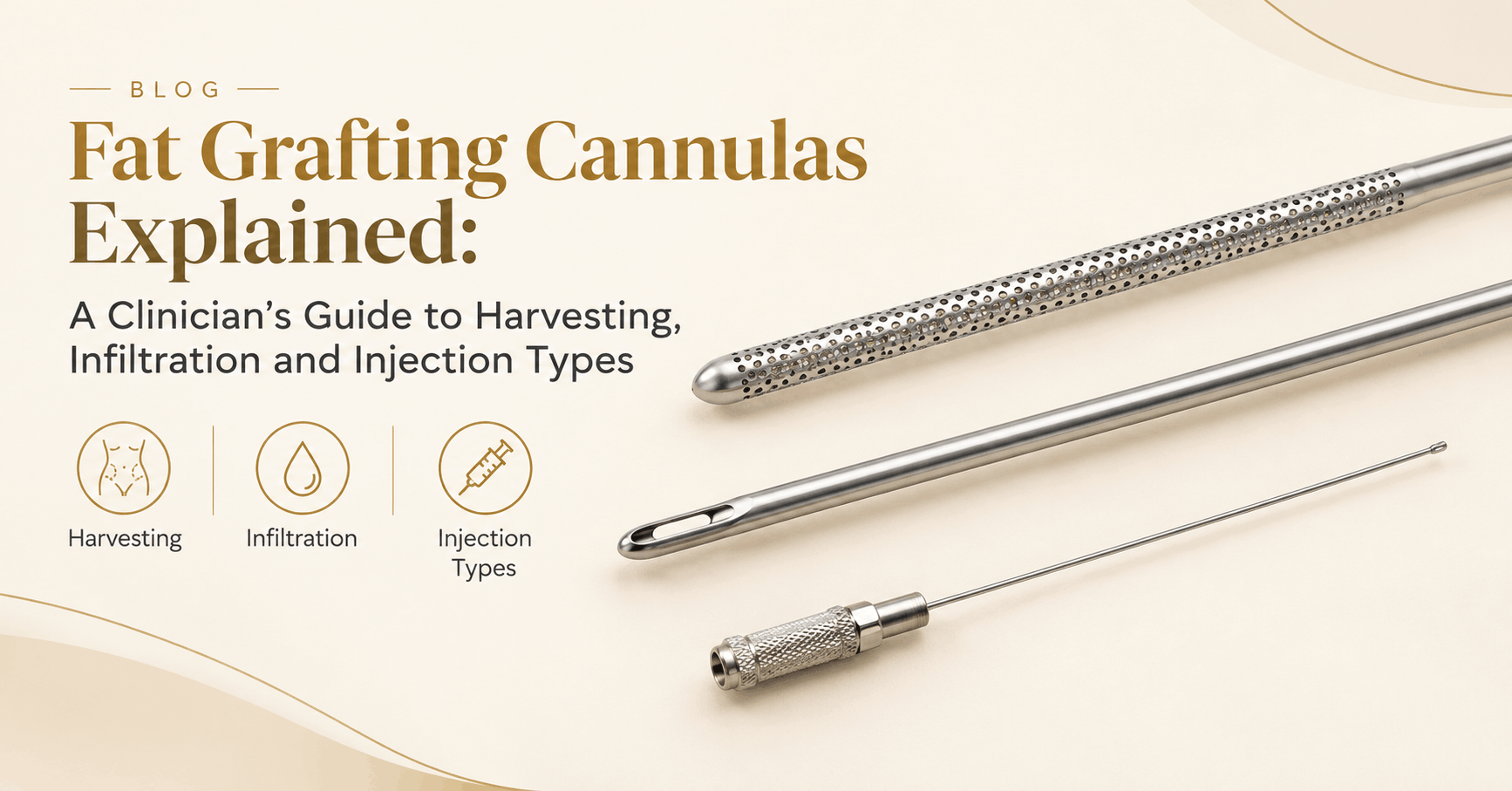
Good fat grafting results come down to more than just surgical skill. The instruments you’re working with — how you harvest, process, and inject — play just as big a role in how the tissue handles and how much control you actually have during the procedure. Picking the right fat grafting cannulas makes a real difference in how fat gets collected, moved around, and placed across different areas of the body.
At a glance, a lot of these instruments can look pretty similar. But they’re not interchangeable — some are built to deliver infiltration fluid, others are made to pull fat out, and injection cannulas have their own job: placing prepared fat exactly where it needs to go. Knowing what sets them apart helps you pick the right tool, whether you’re working on the face, doing body contouring, or handling reconstructive work.
What Is a Fat Grafting Cannula, Really?
At its core, a fat grafting cannula is just a slim, hollow instrument that moves fluid or fat during a transfer procedure. Depending on how it’s built, it might be used to introduce tumescent solution, pull fat from a donor site, or deliver processed fat into the recipient area.
Most of them have blunt tips and openings placed in specific spots along the shaft. The exact size and configuration changes depending on what it’s meant for, where it’s going, and who makes it.
Its role at each stage of autologous fat transfer
Autologous fat transfer is essentially moving fat from one part of the body to another, and it typically breaks down into three stages: infiltration, harvesting, and injection.
During infiltration, a cannula delivers tumescent solution into the donor site to prep the tissue. Then a harvesting cannula goes in and collects the fat, which gets processed according to whatever protocol you’re following. Finally, an injection cannula places that prepared fat into the recipient site.
Here’s the thing worth remembering — every fat transfer cannula needs to match what it’s actually being used for. A cannula built for aspiration just isn’t going to give you the precision you need for delicate injection work, and vice versa. Always check what the instrument was designed to do, its dimensions, and whether it’s compatible with your existing equipment before you reach for it.
Why instrument design actually matters for graft viability
The diameter of a cannula, how its openings are shaped, and how it feels in hand all affect the mechanical stress placed on fat tissue while it’s being collected and moved. Too much trauma to the tissue, and you risk compromising cell integrity — so choosing your instruments carefully isn’t just a nice-to-have.
That said, no cannula on the market can promise graft survival or guarantee a certain retention rate. A lot goes into that outcome — how the fat is processed, your injection technique, what’s going on at the recipient site, and how things go post-op. The goal here is really just picking instruments that let you handle tissue with control, while sticking to your established protocols.
The Three Main Types of Fat Grafting Cannulas
Once you start digging into the types of fat grafting cannulas, the differences become pretty clear. Infiltration, harvesting, and injection cannulas are each designed with different priorities in mind — even when a couple of products look nearly identical sitting next to each other.
Infiltration (tumescent) cannulas
These are the ones delivering tumescent solution into the treatment area, getting the tissue ready for harvesting. A lot of designs use multiple openings to spread fluid more evenly across the area.
All of the following affect how the fluid will be delivered and the feel of the device in use: diameter, length, and positioning of the ports. There is also an option for clinicians who prefer a fat transfer cannula which is reconfigurable and may be changed according to specific needs. When choosing a fat transfer cannula, ensure that it fits with your connections, that you know the use, and that you adhere to the manufacturer’s instructions.
Harvesting/Aspiration cannulas
These are built to pull fat out of the donor site, usually through suction. A liposuction cannula for fat harvesting has aspiration openings designed to let fat in under negative pressure.
The size and layout of those openings affect how the tissue gets collected and what the aspirate ends up looking like. You’ll want to think about diameter, length, how stiff the cannula is, the port design, and whether it plays well with your aspiration system. And of course, correct equipment settings and careful technique go a long way toward avoiding unnecessary tissue trauma.
Injection (transfer) cannulas
These deliver the processed fat into the recipient area, and their whole design is built around precision and maneuverability — facial work and body work usually call for different configurations.
A blunt-tip fat injection cannula has a rounded end instead of a sharp point, which cuts down on the kind of cutting action you’d get from a sharp tip. That said, blunt doesn’t mean risk-free — injury can still happen depending on anatomy, where you’re placing the instrument, and your technique.
Internal diameter and how the ports are set up also affect how material flows and how much control you have over delivery. The instrument you pick should match the consistency of your processed fat and where you’re actually injecting it.
Anatomy of a Fat Transfer Cannula
Understanding the physical build of a cannula makes it a lot easier to compare products and figure out what actually fits your procedure.
Tip design: blunt, bullet, cup
You’ll come across rounded blunt-tips, bullet-shaped tips, and cup-style tips — and each interacts with tissue a little differently, supporting different collection or injection techniques.
Blunt-tips tend to be the go-to for placing fat, while cup-style tips often have more specific collection or delivery jobs depending on the application. When you’re looking at a blunt-tip fat injection cannula, don’t just judge it by the tip — check the port arrangement and overall dimensions too, since tip shape alone doesn’t tell the whole story.
Hole size, count, and arrangement
How big the openings are, how many there are, and where they sit on the cannula all affect how fluid or fat moves in and out. Harvesting cannulas pull fat in through aspiration ports, while injection cannulas push prepared material out through their own designated openings.
More holes don’t automatically mean better performance, by the way. What actually works depends on the procedure, how thick or thin your material is, and how much delivery control you need. Always check the manufacturer’s specs to confirm the design actually fits what you’re trying to do.
Gauge, length, and Luer hub
Gauge tells you the diameter, though it’s worth double-checking the actual spec rather than assuming — diameter affects how material passes through, and length affects your reach and how easily you can maneuver around different areas.
The hub is what connects the cannula to your equipment, like a syringe — and don’t assume every connection fits every device. A micro cannula for fat transfer can be a good fit for procedures that call for a smaller instrument profile, as long as its dimensions and intended use line up with what you need clinically.
Single-Use vs. Reusable Cannulas
Single-use and reusable cannulas carry different trade-offs — infection control, workflow, and what they cost you over time. Which one makes sense really comes down to product labeling, how your facility operates, and what you’re using it for.
Sterility and consistency
Single-use cannulas are meant to be used once, per their labeling, then tossed. They simplify reprocessing, though you still need to store them properly, check the packaging before use, and dispose of them correctly.
Reusable cannulas need proper cleaning, inspection, and sterilization following the manufacturer’s instructions — and that’s not always straightforward, since residual tissue can be tough to get out of narrow channels and small openings. Either way, check the device labeling and stick to your infection-control requirements no matter which format you choose.
Cost per case, over time
Single-use instruments mean you’re buying more, more often. Reusable ones spread that purchase cost across multiple uses — but you’re also paying for reprocessing, labor, inspection, and eventually, replacement.
The smart move is comparing total cost per case rather than just looking at the price tag. Factor in how long the device lasts, how it fits your workflow, your sterility requirements, and ongoing maintenance costs before deciding what’s actually the better deal for your facility.
How to Choose the Right Fat Grafting Cannula
Picking the right cannula really comes down to three things working together: the target area, how you’re processing the fat, and your own established technique.
By target area
Facial work usually demands real precision around delicate anatomy, while body-contouring cases tend to cover more ground and call for different instrument sizes altogether.
A micro cannula for fat transfer often suits facial applications well, as long as its specs match what you’re doing. Other areas might need different lengths, diameters, or port setups — there’s really no single cannula that works everywhere.
By fat processing method
How you process the fat changes its consistency, which in turn affects whether it’ll move smoothly through a given cannula’s internal diameter and openings.
Your autologous fat transfer cannula needs to be compatible with however you’ve prepared the material, and however you plan to deliver it. Check the manufacturer’s guidance and stick to your clinical protocol when deciding which instrument to reach for.
By surgeon technique and volume
Every surgeon has their own preferences — some favor particular aspiration systems, others prefer syringe-based transfer, and cannula length and delivery control vary by comfort level too. How much fat you’re transferring also factors into the decision.
Your liposuction cannula for fat harvesting should fit your collection method, and your injection instrument needs to support the kind of controlled placement you’re after. Weigh ergonomics, compatibility, and how the instrument actually handles — and don’t assume one cannula can safely cover every step.
Cellmyx Fat Transfer Cannula Range
When you’re comparing specialized instruments, it really pays to look closely at the specs, intended use, and available configurations. Cellmyx has a few fat transfer cannula options worth weighing against your own procedural needs.
SuperG® Micro Cannula
Worth a look if you’re exploring micro-cannula options. Check out its available sizes, tip design, port setup, and intended uses before deciding if it fits your procedure.
Confirm it’s compatible with your equipment and run through the manufacturer’s instructions to see if it checks the boxes clinically.
Micro Facial Cup Cannula
Another solid option to look into for facial fat transfer. Its cup-style tip makes the port and tip specs especially worth paying attention to.
Check the manufacturer’s documentation for sizing, intended use, and how it’s meant to be handled. Judge it by the full design, not just the name.
Configurable infiltration fat transfer cannula
This kind of cannula is handy when you need to match instrument specs to different procedural needs on the fly. Keep an eye on length, diameter, port arrangement, and connection compatibility.
Ask for current specs and availability before placing an order, and make sure you’re clear on whether the device is meant for infiltration, aspiration, or injection — those jobs really aren’t interchangeable.
Ready to Shop Fat Transfer Cannulas, or Want Some Guidance?
Choosing the right fat grafting cannulas really comes down to function, size, tip design, and what you’re actually using it for. Infiltration, harvesting, and injection instruments each play their own role, and things like port configuration, gauge, and length all affect how well-suited they are to your specific procedure.
Before you buy, it’s worth comparing specs side by side, checking sterility requirements, making sure it’s compatible with your processing method, and looking at the total cost per case rather than just price alone. Whether you need something for harvesting or you’re after an injection fat transfer cannula, just make sure it’s built for the job you need it to do, and follow the manufacturer’s instructions closely.Take a look at what Cellmyx has available, and don’t hesitate to ask for guidance if you need help narrowing down the right configuration. A well-informed choice here goes a long way toward keeping your workflow consistent and your instruments aligned with what the procedure actually calls for.
Frequently Asked Questions
Fat grafting usually involves three types of cannulas, each serving a different purpose. An infiltration cannula delivers tumescent solution, a harvesting cannula collects fat, and an injection cannula places it in the target area. The choice depends on the procedure and surgeon’s technique.
Blunt cannulas are commonly preferred because their rounded tips help move through tissue without cutting it directly. This design may reduce the chance of damaging blood vessels compared with sharp needles. However, safe fat placement still depends on proper technique and anatomical knowledge.
Yes, cannula design and handling can influence the quality of harvested fat. Factors such as opening size, suction pressure, and the way fat is collected may affect cell integrity. Since outcomes vary between procedures, careful technique and appropriate equipment selection remain important.
Fat transfer cannulas are available in both single-use and reusable options. Disposable cannulas arrive sterile and are discarded after use, while reusable stainless-steel models require proper cleaning and sterilization. The best choice depends on the clinic’s setup, procedural needs, and the manufacturer’s instructions.
